Both and Neither: The LGBTQ+ BAME Apprentices Building Whole Identities in Britain's Workplaces
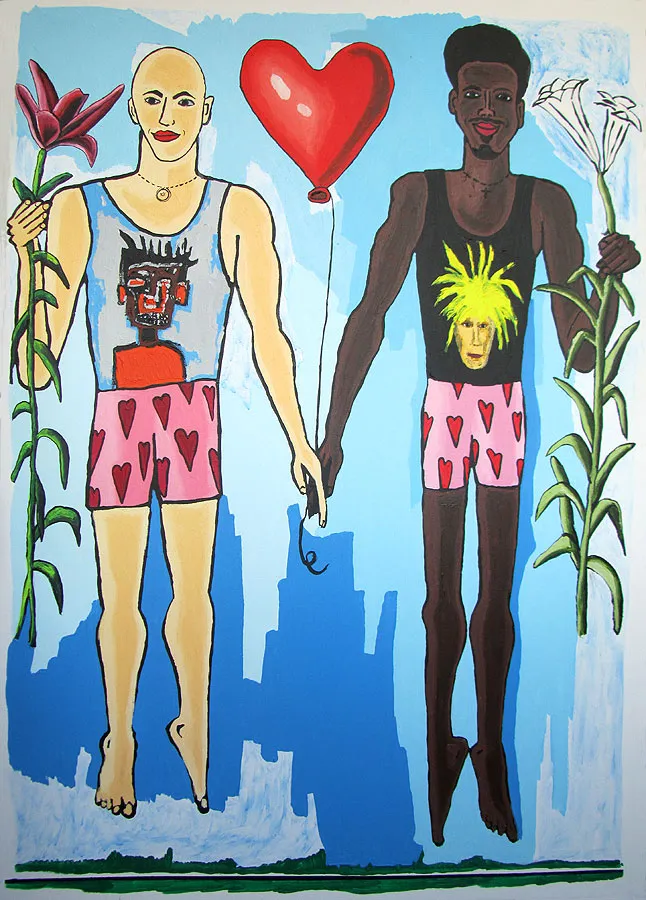
Photo: Raphael Perez Israeli Artist, CC BY 2.0, via Wikimedia Commons
Both and Neither: The LGBTQ+ BAME Apprentices Building Whole Identities in Britain's Workplaces
There is a particular kind of exhaustion that comes from belonging to multiple communities, none of which fully sees you. For apprentices who sit at the intersection of ethnic minority and LGBTQ+ identities, this exhaustion is not theoretical. It manifests in the careful calculation of what to reveal, to whom, and when — a daily negotiation that runs alongside the already demanding work of professional development.
Daniel Osei is a twenty-two-year-old chartered surveying degree apprentice with a national property firm in Bristol. He is Black British, the son of Ghanaian parents, and gay. At work, he is out to a small circle of trusted colleagues. Within his family and the Ghanaian church community that remains central to his parents' social world, he is not. "I live in two separate atmospheres," he says. "At work, I manage how much of my Blackness I bring in. In my community, I manage how much of my queerness exists. There is no single room where I am just Daniel."
Daniel's experience, whilst deeply personal, reflects a structural reality that Britain's apprenticeship and workplace inclusion sectors have been slow to confront.
The Limits of Single-Axis Inclusion
Most corporate diversity programmes are constructed around single identity axes. An employer may have a thriving BAME network and a well-resourced LGBTQ+ employee resource group — and yet the apprentice who belongs to both may feel genuinely at home in neither.
BME LGBTQ+ network leads within large organisations frequently report that their LGBTQ+ groups default to experiences shaped by white, middle-class perspectives, whilst BAME networks can, in some cases, replicate cultural conservatism around sexuality that mirrors the very exclusions these apprentices experience in their home communities.
"Intersectionality is a word that gets used a great deal in corporate diversity conversations," observes Kezia Nwosu, an inclusion specialist who consults with FTSE 250 employers on equitable workplace design. "But genuine intersectional practice — designing support structures that address the compound, layered experience of someone who holds multiple marginalised identities simultaneously — remains rare. Most organisations are still doing identity in silos."
The consequences of this gap are not trivial. Research from Stonewall's 2023 workplace equality index indicates that LGBTQ+ employees from ethnic minority backgrounds report significantly lower rates of feeling able to be open about their identity at work compared to their white LGBTQ+ peers. For apprentices — who are newer to professional environments, have less institutional power, and are actively building their professional identities — this psychological burden carries particular weight.
Strategic Disclosure: A Skill Nobody Teaches
Many LGBTQ+ BAME apprentices develop what might be described as a sophisticated architecture of selective disclosure — a carefully calibrated approach to identity visibility that shifts depending on context, relationship, and perceived risk.
Fatima Al-Hassan, a legal apprentice at a London law firm, is British-Sudanese and identifies as bisexual. She is out at work but has not disclosed her sexuality to her family. "At work, I am very intentional," she explains. "I joined the LGBTQ+ network in my second month, but I waited until I had built relationships with two senior sponsors first. I needed to know there were people who would advocate for me if anything went wrong."
This approach — building protective alliances before expanding visibility — reflects a level of strategic thinking that many apprentices, regardless of background, take years to develop. For LGBTQ+ BAME apprentices, it is often acquired out of necessity from the earliest days of their careers.
Psychologist Dr Sunita Kapoor, who works with young professionals from South Asian backgrounds navigating identity conflicts, notes that this constant strategic management carries a cognitive and emotional cost that is frequently underestimated. "When you are perpetually monitoring your own presentation, modulating your language, and calculating risk, you are expending mental energy that your peers are directing towards their work and their professional development," she says. "Over time, that disparity accumulates."
Finding Allies: The Architecture of Genuine Support
Despite the challenges, many LGBTQ+ BAME apprentices describe finding unexpected allies — individuals whose support is meaningful precisely because it is offered without agenda or performance.
Marcus Thompson, a Black British gay man completing a data analytics apprenticeship in Leeds, credits a line manager who was neither LGBTQ+ nor from an ethnic minority background with creating conditions that allowed him to thrive. "She never made a big deal of anything," he says. "She just consistently included my partner in conversations about weekend plans the same way she did for everyone else's. It sounds small. It wasn't small."
Kezia Nwosu points to this kind of ambient, structural inclusion as far more sustaining than formal programming. "Ally behaviour that is embedded in everyday practice — normalising, including, advocating quietly — is more valuable than a Pride campaign that disappears in July," she argues. "Apprentices notice who shows up for them on an ordinary Tuesday, not just during awareness months."
Some employers are developing more sophisticated frameworks. A small number of professional services firms have begun training line managers specifically on intersectional identity dynamics, moving beyond broad LGBTQ+ awareness to address the particular experiences of colleagues who hold compound marginalised identities. Early evaluations of these programmes suggest measurable improvements in psychological safety scores amongst BAME LGBTQ+ employees.
Community, Complexity, and Cultural Navigation
One of the most nuanced dimensions of this experience involves the relationship between LGBTQ+ BAME apprentices and their own ethnic communities — relationships that are rarely straightforwardly hostile, and rarely straightforwardly affirming.
Daniel describes his Ghanaian community not as a monolith of rejection but as a space of deep love and complex silence. "My mum knows, I think. We have never spoken about it. She loves me completely. The community would not. Those two things are both true at the same time, and I hold them both."
This complexity resists easy narrative. Programmes that frame ethnic minority communities as uniformly hostile to LGBTQ+ identities do a disservice to the nuance of lived experience — and can inadvertently deepen the isolation of apprentices who draw genuine strength and belonging from their cultural heritage whilst navigating its limitations.
Fatima reflects: "I am Muslim, I am Sudanese, I am a lawyer in training, and I am bisexual. None of those things cancels another. My faith is mine. My identity is mine. I refuse to let anyone — inside or outside my community — tell me which parts I am allowed to keep."
A Call for Genuine Intersectionality
For the BAME Apprenticeship Awards, the experiences of LGBTQ+ BAME apprentices represent both a challenge and an opportunity. A challenge, because celebrating the full spectrum of excellence within our communities demands that we resist the temptation to recognise only the most straightforwardly visible forms of achievement. An opportunity, because in naming and honouring the whole person — in all their complexity — we model the kind of inclusion that Britain's workplaces are still learning to practise.
The apprentices navigating these intersections are not defined by their struggles. They are defined by the clarity of purpose, the sophistication of self-knowledge, and the quiet determination they bring to their careers every single day. That is excellence. It deserves to be seen — all of it.