Uncharted Territories: The Hidden Industries Where BAME Apprentices Remain Invisible

The Great Divide: Where Opportunity Meets Invisibility
Whilst apprenticeship programmes have opened doors across Britain's economy, a stark reality persists: entire industries remain virtually untouched by meaningful BAME representation. Despite comprising 14% of the UK population, Black, Asian, and Minority Ethnic communities are conspicuously absent from sectors that offer substantial career opportunities and societal impact.
This invisibility isn't accidental—it's the result of structural barriers, cultural assumptions, and historical exclusion that continues to shape who we imagine belongs in certain roles. Yet across these overlooked sectors, pioneering individuals are quietly dismantling these barriers and creating pathways for others to follow.
1. Veterinary Sciences: Breaking the Rural Stereotype
Current BAME Representation: Less than 2% of practising veterinarians Apprenticeship Opportunities: Veterinary nursing, animal care, agricultural technology
The veterinary profession remains one of Britain's most homogeneous sectors, with rural practice particularly lacking diversity. Cultural assumptions about countryside connections and animal familiarity have historically excluded urban BAME communities from considering veterinary careers.
Dr Rashid Patel, who completed a veterinary nursing apprenticeship in Gloucestershire before qualifying as a veterinarian, challenges these perceptions: "The assumption that you need to grow up on a farm to understand animals is simply wrong. Compassion, scientific curiosity, and dedication matter far more than your postcode."
Patel now runs outreach programmes in Birmingham and Manchester, introducing urban BAME young people to veterinary opportunities. His apprenticeship pathway programme has achieved a 78% success rate in placing BAME candidates into veterinary roles.
2. Aviation: Taking Flight Beyond Stereotypes
Current BAME Representation: 4% of pilots, 6% of aircraft engineers Apprenticeship Opportunities: Aircraft maintenance, air traffic control, aerospace engineering
Despite Britain's significant BAME communities having strong connections to global travel, the aviation industry remains surprisingly homogeneous. High training costs and limited visibility of career pathways have historically excluded many potential candidates.
Fatima Al-Zahra, a British-Iraqi aircraft maintenance engineer who entered the field through an apprenticeship with British Airways, explains the transformation: "When I started my apprenticeship in 2019, I was often the only woman of colour in the hangar. Now I mentor six other BAME apprentices, and we're seeing real change in who applies for these roles."
The shift is measurable. British Airways reports a 340% increase in BAME apprenticeship applications since implementing targeted outreach programmes in 2020.
3. Marine Engineering: Navigating Uncharted Waters
Current BAME Representation: 3% of marine engineers Apprenticeship Opportunities: Naval architecture, offshore engineering, maritime logistics
Britain's maritime heritage remains largely untapped by BAME communities, despite the sector's growing demand for skilled professionals. Historical associations with military service and perceived geographic limitations have created invisible barriers.
Kwame Asante, a Ghanaian-British marine engineer who completed his apprenticeship with Babcock International, is changing these perceptions: "The sea doesn't care about your background—it cares about your skills and respect for safety. Once people understand the incredible technology and global opportunities in marine engineering, they see it differently."
4. Nuclear Energy: Powering Past Prejudice
Current BAME Representation: 5% of nuclear engineers Apprenticeship Opportunities: Nuclear technology, radiation protection, decommissioning
The nuclear industry's combination of high security clearance requirements and specialist knowledge has historically created barriers for BAME entry. However, as Britain invests in new nuclear capacity, the sector desperately needs diverse talent.
Sarah Okonkwo, who progressed from a nuclear apprenticeship at Sellafield to become a senior reactor physicist, emphasises the changing landscape: "The nuclear industry is finally recognising that diverse teams make better safety decisions. My perspective as a Nigerian-British woman has been invaluable in identifying risks that others might miss."
5. Forestry and Conservation: Growing Beyond Green Stereotypes
Current BAME Representation: 2% of forestry professionals Apprenticeship Opportunities: Arboriculture, environmental conservation, woodland management
Environmental careers are often perceived as exclusively white, middle-class pursuits, despite BAME communities being disproportionately affected by environmental challenges. This perception gap has created significant representation issues in forestry and conservation.
Jasdeep Singh, a Sikh arborist who completed his apprenticeship with the Forestry Commission, challenges these assumptions: "Environmental protection affects everyone, but the industry hasn't done enough to welcome diverse voices. My religious connection to nature gives me a different perspective on conservation that benefits everyone."
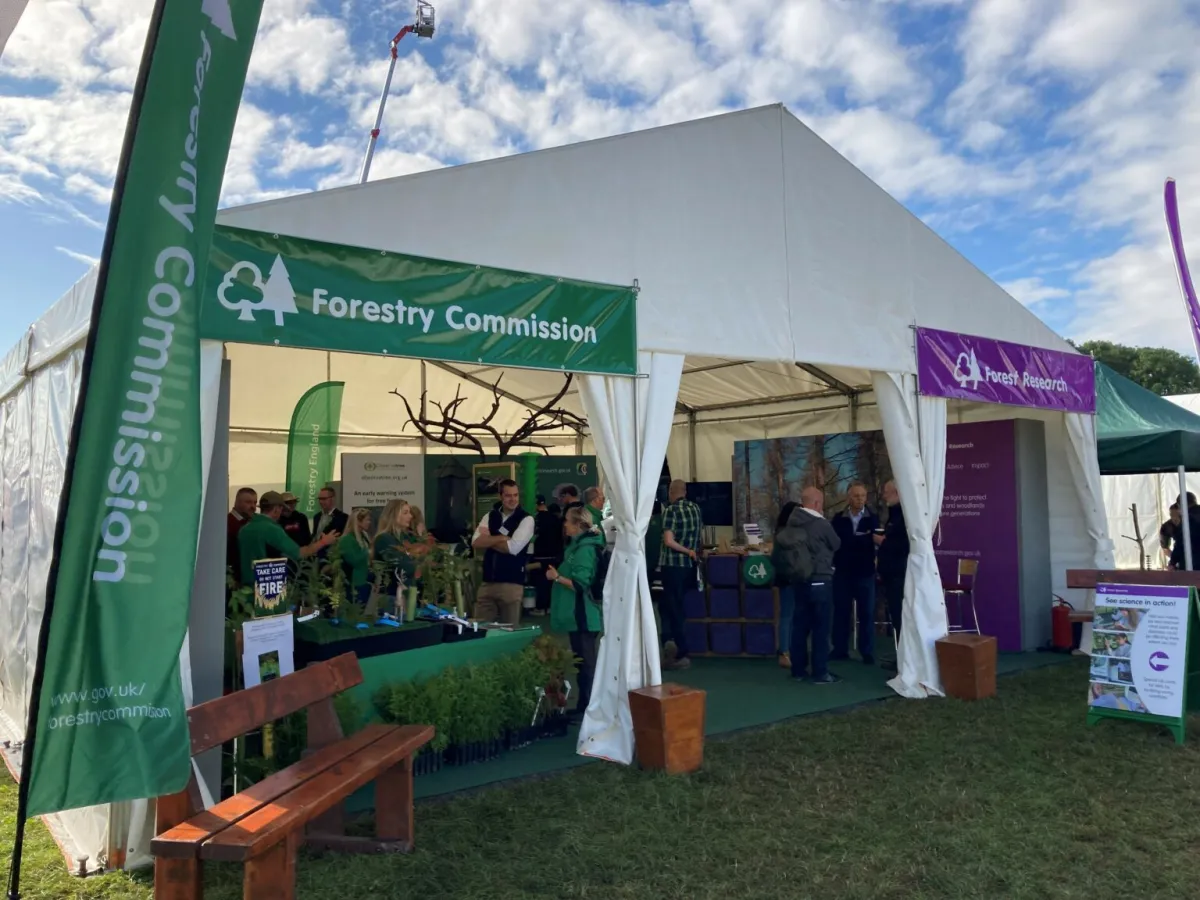 Photo: Forestry Commission, via forestrycommission.blog.gov.uk
6. Textiles and Fashion Technology: Stitching Together Opportunity
Current BAME Representation: 8% in technical roles (despite 40% in manufacturing) Apprenticeship Opportunities: Technical design, sustainable fashion, textile engineering
Whilst BAME workers are well-represented in fashion manufacturing, they remain underrepresented in technical and design roles within the industry. This disparity reflects historical channelling into lower-skilled positions rather than career progression pathways.
Aisha Rahman, who transitioned from garment manufacturing to technical design through an apprenticeship with Burberry, illustrates the potential: "I understood fabric and construction from the factory floor, but the apprenticeship gave me the technical language and design skills to move into creative roles. Now I'm developing sustainable materials that could revolutionise the industry."
7. Agricultural Technology: Cultivating Change
Current BAME Representation: 3% of agricultural professionals Apprenticeship Opportunities: Precision agriculture, agricultural engineering, food technology
Modern agriculture increasingly relies on sophisticated technology, yet BAME representation remains minimal. Rural stereotypes and limited exposure to agricultural innovation have contributed to this underrepresentation.
Ravi Patel, whose precision agriculture apprenticeship led to founding a successful agtech startup, explains the opportunity: "Agriculture is becoming increasingly high-tech and data-driven. My background in urban technology communities gave me insights that traditional farming backgrounds might not provide."
8. Brewing and Distilling: Fermenting Diversity
Current BAME Representation: 4% of brewing professionals Apprenticeship Opportunities: Brewing science, distillation technology, fermentation science
Britain's thriving craft beer and spirits industry offers substantial opportunities, yet remains demographically narrow. Cultural assumptions about alcohol and limited industry visibility have constrained BAME participation.
Amina Hassan, a British-Somali brewing scientist who completed her apprenticeship with BrewDog, challenges these perceptions: "Brewing is pure science and creativity combined. My chemical engineering background and different cultural perspectives on flavour have helped develop products that appeal to much broader markets."
9. Telecommunications Infrastructure: Connecting Beyond Barriers
Current BAME Representation: 7% in field engineering roles Apprenticeship Opportunities: Network engineering, fibre optic installation, telecommunications technology
Despite strong BAME representation in telecommunications retail and customer service, technical infrastructure roles remain underrepresented. Physical demands and safety requirements are often incorrectly assumed to favour certain demographics.
Marcus Thompson, who progressed from a telecommunications apprenticeship to network design manager at BT Openreach, emphasises the evolution: "The industry is finally recognising that diverse teams design better networks. My understanding of different community needs has been crucial in planning infrastructure that serves everyone effectively."
10. Waste Management and Circular Economy: Transforming Perceptions
Current BAME Representation: 6% in technical roles Apprenticeship Opportunities: Environmental engineering, recycling technology, waste-to-energy systems
The waste management sector suffers from image problems that mask its increasing sophistication and environmental importance. BAME communities, often disproportionately affected by waste facilities, remain underrepresented in shaping solutions.
Zara Ahmed, whose environmental engineering apprenticeship led to specialising in community waste solutions, explains the potential: "Communities most affected by waste issues should be involved in designing solutions. My apprenticeship taught me that waste management is really about social justice and environmental protection combined."
Breaking the Cycle: What Must Change
These persistent representation gaps aren't inevitable—they're the result of specific barriers that can be dismantled:
Visibility: Many BAME young people simply don't know these career paths exist. Targeted outreach and role model programmes are essential.
Access: Geographic concentration of opportunities often excludes urban BAME communities. Remote learning and distributed apprenticeships can address this.
Culture: Industry cultures that feel unwelcoming or exclusive must evolve to embrace diverse perspectives and experiences.
Pathways: Clear progression routes from apprenticeships to senior roles must be visible and achievable.
The Competitive Advantage of Inclusion
Sectors that successfully diversify their talent pipelines gain significant advantages. Different perspectives drive innovation, diverse teams make better decisions, and inclusive employers access the full talent pool whilst competitors continue fishing in increasingly shallow waters.
The pioneers profiled here prove that barriers are surmountable when individuals have support, opportunity, and determination. Their success creates ripple effects, inspiring others and demonstrating that excellence knows no ethnic boundaries.
For aspiring apprentices, these overlooked sectors represent extraordinary opportunities to make meaningful impact whilst building rewarding careers. For employers, the choice is clear: embrace diversity now or watch competitors gain the advantage of accessing Britain's full talent potential.
The question isn't whether these industries will diversify—it's whether they'll do so through deliberate action or be forced to change by competitive pressure. The pioneers are already showing the way.