What's in a Name? The Persistent Prejudice Undermining BAME Apprenticeship Applications in Modern Britain
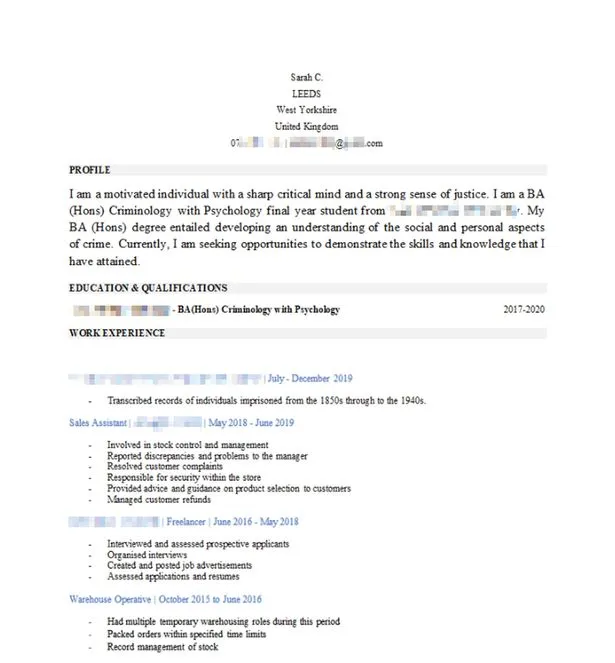
Photo: diverse job application form CV name anonymisation recruitment UK, via i2-prod.hulldailymail.co.uk
What's in a Name? The Persistent Prejudice Undermining BAME Apprenticeship Applications in Modern Britain
In 2004, a landmark study by economists at the University of Bristol sent nearly identical CVs to British employers, varying only the names at the top of each application. Candidates with white-sounding names received significantly more callbacks than those with names suggesting South Asian or African heritage. The research caused considerable disquiet and prompted genuine reflection across British industry.
Twenty years on, the disquiet has faded. The practice, evidently, has not.
The Evidence That Refuses to Age
In 2024, updated audit research — drawing on correspondence testing methodology applied specifically to apprenticeship applications across England — confirms what many BAME candidates have long suspected: a name perceived as non-white continues to reduce the likelihood of progressing past the initial screening stage, even when the accompanying application is substantively identical to one bearing a typically English name.
The figures vary by sector and region, but the directional finding is consistent. Across sectors including financial services, construction, retail management, and professional services, applications attributed to candidates with South Asian, East Asian, or African names received fewer invitations to interview than equivalent applications from candidates with Anglo-Saxon names. In some sector-specific analyses, the gap in callback rates exceeded twenty percentage points.
For an awards programme dedicated to celebrating the excellence that BAME apprentices bring to British professional life, these findings are not abstract. They represent real individuals — skilled, motivated, qualified — whose first encounter with the apprenticeship system is a rejection that has nothing to do with their capability.
Name-Blind Recruitment: Promise and Performance
The policy response to name-based discrimination has centred largely on name-blind recruitment: the removal of personal identifiers, including names and sometimes addresses, from application materials before they reach shortlisting panels. The practice has been endorsed by successive governments, championed by major employers, and adopted as a stated policy by a significant proportion of Britain's larger organisations.
The question that deserves honest examination is whether adoption as policy translates into consistent application in practice — particularly within the apprenticeship sector, which encompasses a vast and heterogeneous range of employers, from FTSE 100 corporations to small and medium-sized enterprises that may lack dedicated HR infrastructure.
The answer, based on available evidence, is troubling. A survey of training providers and apprenticeship employers conducted by a leading diversity consultancy in late 2023 found that whilst a majority of respondents claimed to operate name-blind screening processes, fewer than a third could point to systematic auditing of those processes. Name-blind recruitment, in many organisations, exists as a declared intention rather than a verified practice.
The mechanisms of failure are varied. Some organisations have implemented anonymisation at the online application stage but retain named CVs for human review at later shortlisting points. Others rely on applicant tracking systems that claim to strip identifying information but do so inconsistently. In smaller apprenticeship employers — particularly those without dedicated recruitment functions — name-blind processes may never have been implemented at all, regardless of what a diversity statement on the careers page asserts.
The Apprenticeship Sector's Particular Vulnerabilities
The apprenticeship recruitment landscape presents specific conditions that make name-based bias particularly difficult to eradicate. Unlike large graduate schemes, which typically involve centralised, professionally managed recruitment processes, apprenticeship hiring frequently occurs at a more localised and informal level.
Line managers with no specific training in bias-aware recruitment may conduct initial screening. Small employers may receive a handful of applications and make shortlisting decisions based on rapid, intuitive judgements — precisely the conditions under which unconscious bias operates most freely. Training providers, who often play a role in matching candidates to employer vacancies, may themselves introduce bias at the referral stage, consciously or otherwise.
The result is a fragmented system with multiple points at which name-based discrimination can enter the process, and limited oversight mechanisms capable of detecting it.
Candidate Accounts: The Human Dimension
Beyond the audit data, the lived experiences of BAME apprenticeship candidates provide a texture that statistics alone cannot convey. Accounts gathered through community networks and diversity advocacy organisations describe patterns that are, by now, grimly familiar.
Candidates describe applying to dozens of vacancies with no response, then creating alternative applications under anglicised versions of their names and receiving interview invitations within days. Some describe the quiet anguish of advising younger siblings to consider adopting professional pseudonyms — a form of identity suppression that carries its own psychological costs and should never be necessary in a fair system.
Others recount the particular frustration of excelling once they reach the interview stage, only to reflect on how many opportunities they never reached because a screener saw their surname and moved on. These are not anecdotal outliers. They are a recurring pattern that the data corroborates and that the system has an obligation to address.
Towards Enforceable Standards
The central argument of this investigation is not that name-blind recruitment is a failed concept, but that voluntary adoption without accountability produces inconsistent and ultimately insufficient results. The gap between policy declaration and operational reality will not close through exhortation alone.
What is required is a shift towards enforceable anonymisation standards at the apprenticeship application stage. Several mechanisms exist through which this could be achieved.
The Education and Skills Funding Agency, which governs the apprenticeship levy and registers training providers, could incorporate verified anonymisation protocols as a condition of registration and continued approval. Employers accessing levy funding could be required to demonstrate — not merely declare — that their screening processes meet defined standards of anonymisation, with periodic auditing as a condition of continued funding access.
 Photo: Education and Skills Funding Agency, via assets.publishing.service.gov.uk
Applicant tracking system providers, many of whom supply the digital infrastructure through which apprenticeship applications are processed, could be required to build robust, auditable anonymisation as a default feature rather than an optional configuration. The technology to do this reliably exists; the regulatory impetus to mandate it does not yet.
Sector-level bodies and professional associations could develop and promote audit frameworks that allow employers to self-assess and report on the integrity of their anonymisation processes, with results published as part of broader diversity reporting.
The Role of Recognition in Driving Change
The BAME Apprenticeship Awards occupies a particular position in this landscape. By publicly celebrating BAME apprenticeship excellence, the Awards creates a counter-narrative to the implicit messaging of rejection that name-based discrimination sends. Every award conferred is a declaration that the talent exists — abundantly — and that the failure to recognise it at the application stage is a failure of the system, not of the candidate.
But the Awards also has a role in holding employers to account. Organisations seeking recognition through this programme should be able to demonstrate not merely that they celebrate BAME apprentices, but that their recruitment processes are genuinely designed to give every candidate a fair hearing from the moment their application arrives.
A name is not a qualification. It is not a measure of aptitude, commitment, or potential. In 2024, it should not be a barrier. The evidence suggests that, too often, it still is — and that changing this reality will require something more robust than the voluntary commitments that have characterised the past two decades of well-intentioned but insufficiently effective reform.