Double Strength: The BAME Neurodivergent Apprentices Rewriting Workplace Inclusion in Britain

When Identity Intersects: The Hidden Complexity
Marcus Chen sits in the bright, open-plan office of a leading tech consultancy in Manchester, his fingers moving rapidly across dual monitors as code streams across the screens. As a software development apprentice with autism and Chinese heritage, Marcus navigates daily challenges that most diversity training programmes never address. "People see my ethnicity first, then maybe notice I'm different in other ways," he reflects. "But both parts of who I am actually make me better at what I do."
Marcus represents a growing yet underserved community: BAME apprentices who are also neurodivergent. These individuals face the compound complexity of managing racial and cultural identity alongside conditions such as dyslexia, ADHD, autism spectrum disorders, and other neurological differences. Their experiences reveal gaps in workplace inclusion strategies while demonstrating extraordinary resilience and innovation.
The Statistical Silence
Official apprenticeship statistics rarely capture the intersection of ethnicity and neurodiversity, creating an invisible population whose needs remain largely unaddressed. However, emerging research from the National Autistic Society suggests that neurodivergent individuals from BAME backgrounds face "double discrimination" in employment, with success rates significantly lower than either group experiences independently.
Dr. Amira Hassan, a specialist in workplace neurodiversity at Birmingham City University, explains the complexity: "BAME neurodivergent apprentices often feel pressure to mask both their neurological differences and cultural identity to fit workplace norms. This emotional labour can be exhausting and ultimately counterproductive for both individual development and employer outcomes."
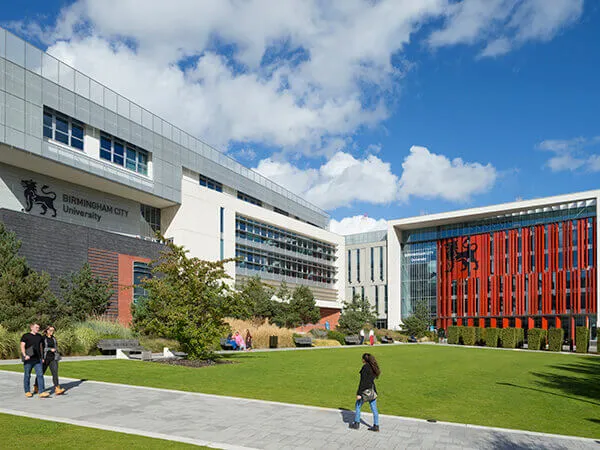 Photo: Birmingham City University, via www.opendays.com
Cultural Complexity and Family Dynamics
For many BAME neurodivergent apprentices, family understanding presents additional challenges. Kemal Osman, a mechanical engineering apprentice with dyslexia from a Somali family in Sheffield, describes the delicate balance: "In my culture, academic achievement is highly valued, but learning differences aren't always understood. Explaining that I'm intelligent but process information differently required patience from everyone."
This cultural dimension adds layers to an already complex situation. Traditional BAME families may view neurodivergent traits through different cultural lenses, sometimes interpreting them as character issues rather than neurological variations. Successful apprentices often become inadvertent educators within their own communities, challenging perceptions while pursuing professional development.
Workplace Champions Making the Difference
Progressive employers are beginning to recognise the unique value that BAME neurodivergent apprentices bring to their organisations. Rolls-Royce's apprenticeship programme has developed specific support frameworks after recognising that their most innovative problem-solvers often came from diverse backgrounds with alternative thinking patterns.
"We discovered that apprentices who think differently—whether due to cultural perspective, neurodivergent processing, or both—consistently generate the most creative solutions to engineering challenges," explains Sarah Thompson, Rolls-Royce's Head of Apprentice Development. "Our role is creating environments where these strengths flourish rather than expecting everyone to conform to a single model."
The company now provides tailored support including flexible communication styles, alternative assessment methods, and cultural mentorship alongside traditional apprenticeship training. Results have been remarkable: retention rates among BAME neurodivergent apprentices exceed company averages, and innovation metrics show measurable improvements.
Innovative Support Strategies
Leading organisations are developing sophisticated approaches to supporting intersectional identities. BT's apprenticeship programme has introduced "identity champions"—senior employees who understand specific combinations of diversity characteristics and provide targeted guidance.
Aisha Williams, a network engineering apprentice with ADHD from a Caribbean background, credits this approach with her success: "My champion understood both the cultural pressure I felt to excel and the way my brain processes information. She helped me develop strategies that worked with my natural patterns rather than against them."
These strategies include practical accommodations such as written instructions alongside verbal briefings, flexible working arrangements that respect cultural obligations, and assessment methods that recognise different demonstration styles while maintaining rigorous standards.
The Technology Advantage
The technology sector has emerged as particularly welcoming to BAME neurodivergent apprentices, partly due to industry recognition that diverse thinking patterns drive innovation. Companies like Accenture and IBM have developed specific recruitment pipelines that actively seek neurodivergent talent from diverse backgrounds.
Ravi Patel, a cybersecurity apprentice with Asperger's syndrome, found his analytical mind perfectly suited to threat detection: "My attention to detail and pattern recognition—traits that sometimes made school difficult—are exactly what cybersecurity requires. The cultural background helps too; I understand how different communities use technology, which informs better security design."
Educational Innovation and Assessment Reform
Traditional assessment methods often disadvantage neurodivergent learners, but apprenticeship programmes are pioneering alternative approaches. The Institute for Apprenticeships and Technical Education has begun recognising that practical demonstration, portfolio development, and real-world problem-solving can provide more accurate measures of competency than conventional testing.
Jamila Khan, a digital marketing apprentice with dyslexia from a Pakistani background, benefited from this flexibility: "Instead of written exams, I demonstrated my understanding through campaign development and client presentations. This showed my actual abilities rather than my struggles with traditional academic formats."
Mentorship Models That Work
Successful support often comes through mentorship that acknowledges the full complexity of intersectional identity. The most effective mentors are those who either share similar experiences or demonstrate deep cultural competency alongside neurodiversity understanding.
Michael Adebayo, now a qualified quantity surveyor who mentors current apprentices, explains his approach: "I help them understand that being Nigerian and having ADHD aren't obstacles to overcome—they're perspectives that add value. The key is finding employers who recognise that value and environments where you can thrive authentically."
Creating Systemic Change
The experiences of BAME neurodivergent apprentices are driving broader changes in workplace inclusion strategies. Rather than addressing diversity and neurodiversity as separate issues, leading employers are developing integrated approaches that recognise the reality of intersectional identities.
This evolution requires sophisticated understanding from HR teams, line managers, and colleagues. Training programmes are expanding beyond basic diversity awareness to include practical guidance on supporting complex identity combinations while maintaining professional standards and team cohesion.
The Business Case for Inclusion
Employers who successfully support BAME neurodivergent apprentices report significant benefits including enhanced innovation, improved problem-solving capabilities, and stronger team dynamics. These apprentices often bring unique perspectives that challenge conventional thinking while demonstrating exceptional dedication and loyalty to supportive employers.
Research from the Centre for Neurodiversity at Work indicates that teams including neurodivergent members from diverse backgrounds consistently outperform homogeneous groups on creativity and complex problem-solving tasks.
Building Tomorrow's Inclusive Workplaces
The journey of BAME neurodivergent apprentices illuminates both the challenges and opportunities within Britain's evolving workplace culture. Their success requires employers to move beyond checkbox diversity towards genuine inclusion that recognises and celebrates the full spectrum of human difference.
As these trailblazing apprentices progress through their careers, they're not just achieving personal success—they're creating pathways for others and demonstrating that true workplace inclusion requires understanding the beautiful complexity of human identity. Their double strength is becoming Britain's competitive advantage.